Due diligence before an investment covers a lot: the team, the product, the market, the contracts, the numbers. Somewhere near the start sits a plain question that is easy to skip because the answer seems obvious: is the company you're investing in the company the documents describe? An official register answers that in minutes, from a source nobody in the deal controls. This post is a checklist for that step, for angels, venture funds and anyone signing a term sheet.
What you'll learn
- Why register checks belong in early due diligence
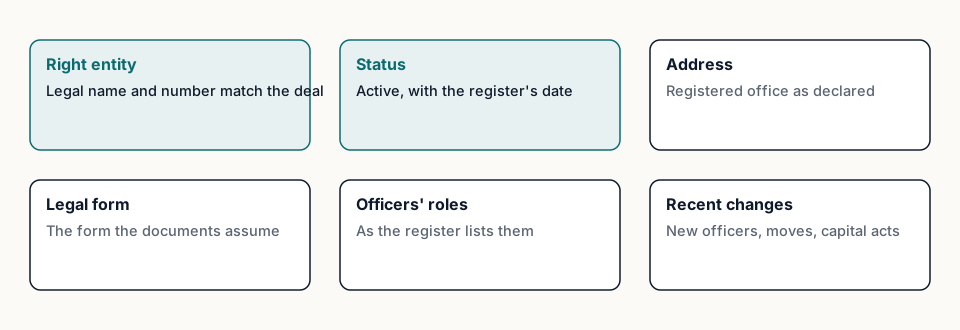
- Six things the official record can confirm
- How the check differs between France and Spain- What the register leaves to other work
- How to keep the result with the deal file
Why bother, when the founders told you?
Founders usually tell the truth about their company, and most register checks simply confirm what the deck says. The check is still worth doing, for three reasons.
Documents drift. A company renames itself, moves its registered office or changes its legal form, and the shareholders' agreement draft still carries the old details. Catching that before signing is cheaper than amending after.
Groups are confusing. Startups often have a holding company, an operating company and sometimes a foreign parent. Investors need to know which entity they're putting money into, and the deck rarely makes that clear.
It's independent. Everything else in early diligence comes from the company. The register is one of the few sources that doesn't.
The checklist
1. The right entity
Take the legal name and official number from the term sheet or the draft agreement, and look the company up by the number. Does the name match? Is it the entity you expect: the operating company, or a holding above it? If the founders mention a parent or a subsidiary, look each one up separately.
2. The status
Is the company active? Each register says this its own way. In France, a closed company is shown as ceased, with its date. In Spain, status follows the acts published in the BORME, and a company whose only act is its incorporation has no status act, so its status is unknown. Read the register's own word, not just a summary.
3. The registered office
Compare the registered address with the one in the documents. A difference is often harmless (a move not yet reflected in the paperwork), but it's worth a question.
4. The legal form
The form shapes what the documents can do: the share classes available, how decisions are taken, who signs. Make sure the form on the register is the one your lawyers drafted for. In France, the register gives the INSEE legal category; in Spain, the legal form comes from the company's name suffix, such as S.L. or S.A.
5. The officers' roles
Many registers list the company's officers with their roles. Check that the people signing hold the roles the documents give them. Use the names only for this purpose, as data-protection law allows.
6. Recent changes
A recent change of officers, a move, or a capital act shortly before a round is normal, but you want to know about it. In Spain, the BORME publishes each of these as a dated act; the BORME explained shows how to read them. In France, the register shows the current state and its dates.
How it differs by country
Fuentio covers France (the full public register) and Spain (companies with a BORME act since 6 October 2025). The full list is on our coverage page.
- France: look the company up by its SIREN, or by the SIRET of an establishment. The answer gives the legal name, legal category, status, registered office and officers' roles. See the French registers explained.
- Spain: search by legal name, because the BORME doesn't include the NIF or CIF. Confirm with the province and the registry sheet.
What the register leaves to other work
A register check is a small part of diligence. It doesn't cover:
- The numbers. No accounts, no valuation and no ratings. Financial diligence is separate work.
- Ownership. The cap table and who ultimately controls the company come from the company's own records and other checks, not from our sources.
- Contracts, IP and litigation. These need your lawyers.
- The people. Background checks on founders are separate, and subject to their own rules.
The register tells you the company is what the documents say. The rest of diligence tells you whether it's worth investing in.
Keeping the result
Add the register answer to the deal file, as it was on the day you checked:
- The identifier you checked, and the date.
- The legal name, status, address, legal form and officers' roles the register gave.
- The source, its link and its licence, which every Fuentio answer carries in its
provenanceblock. - Any differences you found, and how the founders explained them.
Check again just before closing. A few weeks can pass between the first look and the signature, and the register may have moved on.
For other places the same check helps, read five uses for company verification beyond KYB.
Limits. A register check confirms a company's identity, status, registered office, legal form, officers' roles and, in Spain, its published acts, as the register records them. It says nothing about finances, ownership, contracts or the people behind the company. Fuentio covers France and Spain, not other countries. This post isn't legal or investment advice.
Frequently asked questions
Does a register check replace legal due diligence?
No. It confirms the basic facts about the entity. Your lawyers still review the documents, the ownership and the contracts.
Can I see a startup's accounts this way?
No. Fuentio doesn't offer accounts or ratings. Ask the company, or use the sources your financial diligence relies on.
When should I run the check?
Early, when the term sheet names the entity, and again just before closing.
Sources
- INSEE, definition of the SIREN number: insee.fr
- Annuaire des Entreprises: annuaire-entreprises.data.gouv.fr
- The BORME: boe.es/diario_borme